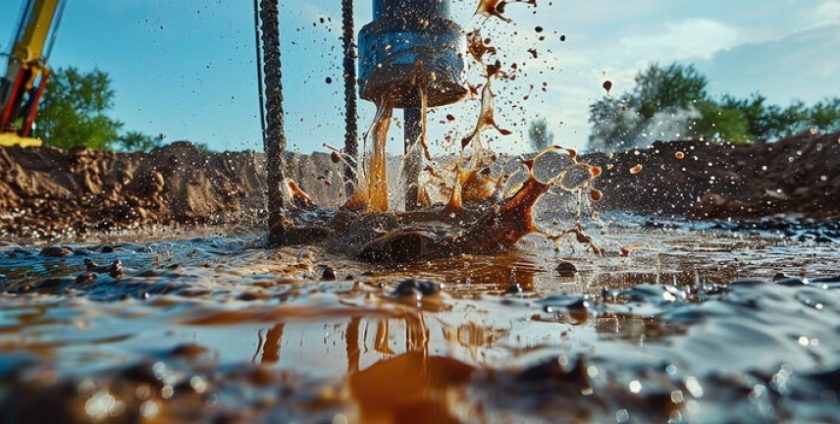
Drilling Mud and Its Importance: Its Types, Uses, Applications & Advantages.
Drilling Mud and Its Importance – Drilling Mud, also known as Drilling Fluid Mud, is one of the most critical elements in the oil and gas industry. Without drilling mud, modern drilling would be impossible. It supports every stage of drilling operations, from drilling the wellbore to maintaining well control and protecting the reservoir.
Despite its simple name, drilling mud is a complex engineered fluid system designed through precise chemistry, physics, and engineering principles. Additionally, we will highlight why Peak Universal Business is your best choice as a supplier.
In this comprehensive guide, we explore what drilling mud is, how it works, why it is essential, and how the right drilling fluid program can significantly improve operational safety, drilling efficiency, and overall well performance.
Drilling Mud and Its Importance
Drilling mud is a specially formulated fluid circulated continuously through the drill string and annulus during drilling operations. It performs several critical functions, including cooling the drill bit, stabilizing the wellbore, transporting cuttings to the surface, and balancing formation pressures.
Why Drilling Mud Importance
Drilling in the oil and gas industry is a complex activity filled with geological pressures, extreme temperatures, and unpredictable subsurface conditions. To overcome these challenges, drilling mud is used to stabilize the well, control formation pressures, and ensure smooth drilling progress.
From a technical standpoint, drilling mud is an engineered fluid system optimized to manage downhole conditions and maintain wellbore integrity.
From a commercial and operational standpoint, high-performance drilling mud reduces risks, accelerates drilling, and saves millions in operational costs.
Drilling mud is not just a fluid—it is a strategic asset for every drilling project.
Types of Drilling Mud:
There are several types of Drilling Mud, each designed for specific drilling conditions and requirements. The main types include:
1. Water-Based Mud (WBM)
Water-Based Mud is the most common type of Drilling Mud. It consists of water as the primary fluid and various additives to enhance its properties.
Types of WBM:
- Freshwater Mud: Uses freshwater as the base fluid.
- Saltwater Mud: Uses saltwater or brine as the base fluid.
- Polymer Mud: Contains polymers to improve viscosity and stability.
2. Oil-Based Mud (OBM)
Oil-Based Mud uses oil or synthetic oil as the base fluid, with water emulsified in it. It is used in challenging drilling conditions where WBM might fail.
Types of OBM:
- Diesel-Based Mud: Uses diesel as the base fluid.
- Mineral Oil-Based Mud: Uses mineral oil as the base fluid.
- Synthetic-Based Mud: Uses synthetic oil for enhanced environmental performance.
3. Synthetic-Based Mud (SBM)
Synthetic-Based Mud is similar to OBM but uses synthetic materials as the base fluid. It is designed to minimize environmental impact while providing the benefits of OBM.
4. Air-Based Mud
Air-Based Mud uses air, mist, foam, or aerated liquids as the drilling fluid. It is used in specific drilling environments where liquid-based muds are not suitable.
Uses and Applications:
Drilling Mud has a wide range of uses and applications in the oil and gas industry:Cooling and Lubricating, Carrying Cuttings, Maintaining Hydrostatic, Stabilizing, Logging and Formation
1. Cooling and Lubricating the Drill Bit
Drilling Mud cools and lubricates the drill bit, reducing friction and heat generated during drilling. This extends the life of the drill bit and enhances drilling efficiency.
2. Carrying Cuttings to the Surface
Drilling Mud carries rock cuttings from the bottom of the borehole to the surface. This prevents cuttings from accumulating at the bottom and obstructing the drilling process.
3. Maintaining Hydrostatic Pressure
Drilling Mud maintains hydrostatic pressure in the wellbore, preventing the influx of formation fluids and ensuring well stability.
4. Stabilizing the Wellbore
Drilling Mud stabilizes the wellbore by forming a filter cake on the borehole walls. This prevents the collapse of the borehole and ensures smooth drilling operations.
5. Logging and Formation Evaluation
Drilling Fluid supports logging and formation evaluation by providing a medium for the transmission of logging tools and sensors. It helps in the collection of data on the subsurface formations.
Advantages:
Drilling Mud offers several advantages, making it an essential component in the drilling process:
1. Enhanced Drilling Efficiency
Drilling Fluid enhances drilling efficiency by cooling and lubricating the drill bit, carrying cuttings to the surface, and maintaining well stability.
2. Improved Well Control
Drilling Fluid maintains hydrostatic pressure, preventing blowouts and ensuring well control. It enhances the safety of drilling operations.
3. Environmental Protection
Drilling Mud can be formulated to minimize environmental impact. Synthetic-Based Mud and Water-Based Mud are designed to reduce toxicity and environmental footprint.
4. Versatility
Drilling Fluid can be customized to suit specific drilling conditions and requirements. Different types of Drilling Mud can be used for various drilling environments.
Disadvantages:
1. Environmental Concerns
Oil-Based Mud and some additives used in Drilling Mud can pose environmental risks if not managed properly. Disposal of used mud can be challenging.
2. Cost
High-quality Drilling Mud and additives can be expensive. The cost of managing and disposing of used mud also adds to the overall drilling costs.
3. Complex Formulation
Formulating Drilling Fluid to meet specific drilling conditions requires expertise and precision. Incorrect formulation can lead to drilling problems and increased costs.
Price Factors:
The price of Drilling Mud is influenced by several factors:
1. Type of Drilling Mud
Different types of Drilling Fluid have varying costs. Oil-Based Mud and Synthetic-Based Mud are generally more expensive than Water-Based Mud.
2. Additives
The cost of additives used to enhance the properties of Drilling Fluid affects its overall price. High-performance additives can significantly increase the cost.
3. Volume
The volume of Drilling Mud required for a drilling project influences its price. Larger projects require more mud, leading to higher costs.
4. Disposal and Management
The cost of managing and disposing of used Drilling Fluid Mud adds to the overall price. Environmental regulations and disposal methods impact these costs.
5. Market Conditions
Market conditions, including supply and demand dynamics, influence the price of Drilling Fluid Mud. Fluctuations in crude oil prices and availability of raw materials also affect costs.
Why Choose Peak Universal Business as Your Trusted Supplier?
Peak Universal Business is a leading supplier of high-quality Drilling Mud. Here’s why you should choose them for your needs:
1. Quality Assurance
Peak Universal Business is committed to providing products that meet the highest quality standards. Their Drilling Fluid undergoes rigorous testing to ensure it meets the required specifications and performs reliably in various applications.
2. Industry Expertise
With extensive experience in the industry, Peak Universal Business has a deep understanding of the diverse applications and requirements of Drilling Fluid. They can offer expert guidance and support to help you find the right solution for your needs.
3. Reliable Supply Chain
Peak Universal Business has a robust supply chain that ensures timely delivery of products. Their global reach and efficient logistics enable them to meet the demands of clients worldwide.
4. Customer-Centric Approach
Customer satisfaction is a top priority for Peak Universal Business. They strive to build long-term relationships with their clients by offering personalized service, competitive pricing, and reliable support.
5. Sustainable Practices
Peak Universal Business is committed to sustainable practices, including the use of eco-friendly materials and production processes. They are dedicated to minimizing their environmental impact and contributing to a greener future.
Conclusion- Drilling Mud and Its Importance
Drilling Fluid is an essential component in the oil and gas industry, playing a crucial role in ensuring the efficiency and safety of drilling operations. Understanding the different types, uses, applications, advantages, and disadvantages of Drilling Fluid is vital for optimizing drilling performance and managing costs effectively.
When looking for a reliable supplier, Peak Universal Business stands out with their commitment to quality, industry expertise, and customer-centric approach.
Whether you need Water-Based Mud, Oil-Based Mud, Synthetic-Based Mud, or Air-Based Mud, Peak Universal Business is your trusted partner for high-quality solutions.
By choosing Peak Universal Business, you can be assured of receiving the best products and services tailored to your specific needs, helping you achieve optimal results in your drilling operations.
Types, Uses and Applications: Cooling and Lubricating, Carrying Cuttings, Maintaining Hydrostatic, Stabilizing, Logging and Formation.
You can Read More about Our products Here:
What is the Strongest Bitumen?
What is the Specification of Bitumen?
Difference Between Bitumen and Asphalt?
Application of PG Bitumen (Performance Bitumen)
Uses of Oxidized Bitumen 115/15
Uses of Penetration Bitumen 60/70
If You have any other Query or Question you want to ask, Please don’t hesitate to Contact Us.


- 0 comment
Leave a Reply